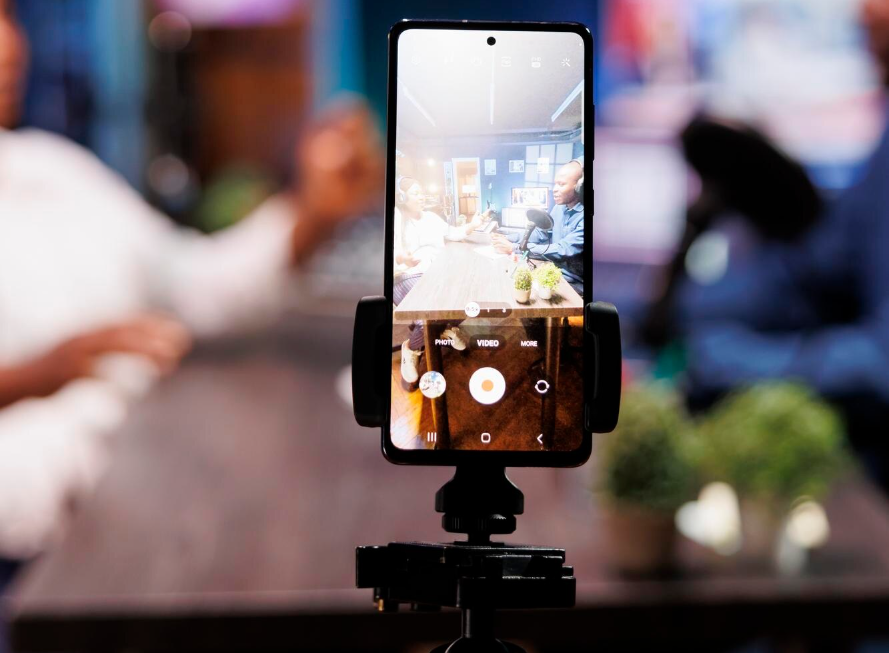

In the contemporary digital economy, attention is often treated as the ultimate prize. Brands spend billions to capture eyes, buy impressions, and interrupt the scroll. However, as the marketplace becomes increasingly saturated with high-fidelity noise, a more valuable and volatile currency has emerged: conviction. While impressions can be purchased and attention can be engineered, trust remains a non-fungible asset that must be earned through a consistent, psychological contract. In the realm of influencer marketing, the pivot from “reach” to “resonance” is not merely a tactical shift; it is a fundamental recognition of how human belief is formed, maintained, and weaponized in a commercial context.
Understanding why influencers matter requires looking past the superficial metrics of follower counts and engagement rates. It requires an interrogation of the “Trust Economy” a landscape where the traditional pillars of authority have crumbled, leaving a void that is being filled by the “Relatable Expert.” To master this medium, one must understand that an influencer’s value is not their distribution power, but their Trust Equity.
The Death of the Institutional Authority
To understand the rise of the influencer, we must first acknowledge the decline of the institution. For decades, consumer trust was top-down. We trusted the nightly news anchor, the celebrity in the glossy magazine, and the “Expert” in the white lab coat. These were figures of objective authority, distanced from the public by a veneer of professional polish.
However, the democratization of information via the internet fractured this monolith. The modern audience has developed a profound “Skepticism Tax.” They have been conditioned to see through the high-production values of traditional commercials, viewing them not as information, but as manipulation. This is where the influencer thrives. They operate in the “horizontal” space of peer-to-peer recommendation. They are not talking down to an audience from a pedestal; they are talking across to them from a shared digital foxhole.
This shift represents a move from Institutional Trust to Distributed Trust. We no longer look to the brand for the truth about the product; we look to the person who has used the product within the context of a life we recognize.
The Parasocial Contract, Intimacy at Scale
The foundational engine of influencer marketing is a psychological phenomenon known as Parasocial Interaction (PSI). First defined in the 1950s to describe the bond between television viewers and performers, PSI has reached its zenith in the age of social media. It describes a one-sided relationship where the audience member develops a sense of real-world intimacy, friendship, and loyalty toward a creator they have never met.
This intimacy is not accidental; it is built on the “Backstage Pass” effect. By sharing mundane details morning routines, personal failures, unedited thoughts influencers trigger the release of oxytocin in their viewers. This is the “trust hormone” that facilitates social bonding. When a creator shares a vulnerability, the viewer’s brain categorizes that information as a “secret” shared between friends.
This creates a Parasocial Contract. The influencer provides the audience with entertainment, companionship, and a sense of belonging; in exchange, the audience provides the influencer with their attention and, crucially, their benefit of the doubt. When a brand enters this equation, they are not just buying an ad spot; they are stepping into a pre-existing emotional bond. If the brand respects the contract, they inherit the trust. If they violate it by forcing the creator to act out of character, they trigger Cognitive Dissonance.
The Mechanics of Source Credibility
In social psychology, the persuasiveness of a message is directly tied to the perceived credibility of the source. This is not a vague feeling but a calculated assessment made by the human brain across three distinct dimensions: Expertise, Trustworthiness, and Likability.
Perceived Expertise is the audience’s belief that the creator has the “Right to Speak.” This is why niche authority is exponentially more powerful than broad fame. A specialist who spends years reviewing mechanical keyboards possesses a level of granular expertise that a Hollywood A-lister cannot replicate. Their recommendation is weighted with the “Social Capital” of their knowledge.
Trustworthiness is often established through “Selective Rejection.” This is the most counter-intuitive aspect of influencer strategy. A creator’s credibility is built not by what they promote, but by what they refuse to promote. When an influencer publicly declares, “I turned down a six-figure deal because the product was subpar,” they are performing Costly Signaling. They are proving to their audience that their integrity is not for sale. Paradoxically, this makes them more valuable to future brand partners, as their eventual “Yes” carries the weight of a vetted conviction.
Likability (or Attitudinal Similarity) is the final pillar. We are evolutionarily hardwired to trust people who are “like us.” We seek out creators who share our humor, our aesthetic, and our worldview. This similarity acts as a psychological shortcut (a heuristic) that bypasses the need for intensive research. If someone I like and who is like me uses this product, my brain concludes that I will likely like it too.
The Contextual Narrative vs. The Interruptive Ad
Traditional advertising is, by definition, an interruption. It is a commercial break that stops the flow of entertainment to deliver a pitch. Influencer marketing, when executed correctly, is integrative. It embeds the product within a “Lived Narrative.”
This is the power of Contextual Priming. When a product is shown as part of a creator’s actual lifestyle a specific coffee bean used in a real morning, a software tool used to solve a real business problem it isn’t processed as a “sales pitch.” Instead, the brain processes it through Observational Learning. We see the product in its natural habitat, solving a problem or providing a benefit in real-time.
This reduces the “Buyer’s Friction.” The audience doesn’t have to imagine how the product might fit into their lives; they have already seen a functional blueprint of it. Furthermore, because the influencer has already done the “emotional labor” of vetting the brand, the follower feels a reduced sense of risk. The influencer acts as a Relational Filter, sifting through the noise of the marketplace to present only what is worthy of the audience’s limited time and money.
The Fragility of Authenticity and the Cost of Control
The most common mistake brands make in this space is the “Control Fallacy.” Accustomed to traditional media, brand managers often attempt to script influencers, demanding specific verbiage, rigid lighting, and sanitized messaging. However, in the psychology of trust, perfection is the enemy of persuasion.
This is best explained by The Pratfall Effect. Social psychology suggests that highly competent people (like successful creators) actually become more likable when they exhibit a minor flaw or make a mistake. It humanizes them. When a creator says, “I struggled to set this up at first, but here’s how I fixed it,” they are building a bridge of authenticity.
When a brand removes these “human” elements through over-editing, they destroy the very thing they are paying for. If the creator’s “Natural Voice” is replaced by a “Corporate Voice,” the audience’s internal alarm system ‘the amygdala’ is activated. They sense a mismatch. They sense that the “Parasocial Contract” has been breached for a paycheck. This results in Reactance, a psychological state where people actively resist a message because they feel their freedom of choice or the honesty of the interaction is being threatened.
Trust as a Strategic Long-Term Asset
For a brand, influencer marketing should not be viewed as a short-term “burst” tactic, but as a long-term investment in Associative Memory. One-off posts create “Recency Bias,” a quick spike in awareness that fades almost as fast as it appears.
In contrast, long-term partnerships allow the brand to become an Attribute of the creator’s identity. When an audience sees a creator use the same brand over six months, the brand stops being a “sponsor” and starts being a “partner.” This repetition builds Fluency. The more easily a brand comes to mind in association with a trusted creator, the more “true” and “reliable” that brand feels to the consumer. This is the “Mere Exposure Effect” we develop a preference for things simply because we are familiar with them, provided that familiarity is rooted in a positive context.
The Bridge to the Future
Influencers matter because they are the only entities capable of scaling human intimacy. In an era defined by deepfakes, AI-generated content, and a pervasive sense of digital alienation, the human element has become the ultimate premium.
We are moving toward a “Relationship-First” economy. In this new world, the brands that win will not be the ones with the loudest voices, but the ones with the strongest bridges. The influencer is that bridge.
They provide the Psychological Permission for a consumer to move from interest to action.
Ultimately, marketing is not about the movement of products; it is about the movement of belief. And belief cannot be coerced it must be hosted. By respecting the psychology of trust and the sanctity of the creator-audience bond, brands can move beyond the transaction and into the realm of true influence. Because in the final analysis, we do not buy what we are told to buy; we buy what we believe in, from people we trust.